Day 4
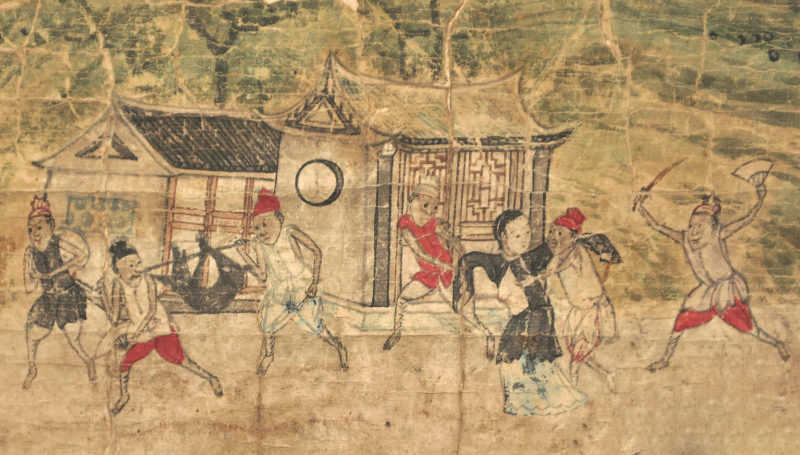
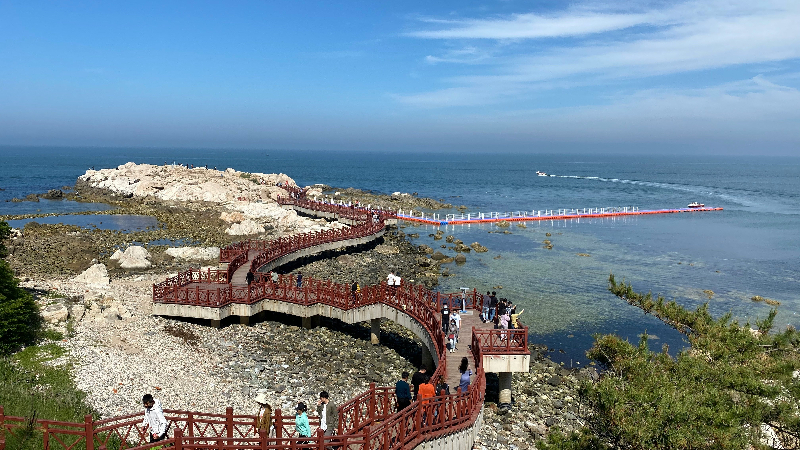
Today, we journey further back in time to explore a pivotal chapter in East Asia’s maritime history. From the 1220s to the mid-1500s, piracy thrived in the waters between northern China, the Korean Peninsula, and western Japan, shaping trade, diplomacy, and regional power dynamics. How is this turbulent era remembered today? We’ll visit Penglai Island, home to the residence of Qi Jiguang, a legendary Ming Dynasty military general who defended China’s coasts against pirate invasions. Through visits to local historical museums, we’ll uncover how these regional conflicts are reinterpreted for contemporary audiences, fueling nationalism and influencing China’s complex relationships with Japan and other neighboring powers.
In the afternoon, you will have the opportunity to discover downtown Yantai, a historic treaty port where East meets West. Nestled along the stunning Shandong coastline, Yantai boasts pristine beaches, rolling hills, and a rich maritime heritage. Explore the charming Old Town and relax by the sea as we end our journey in Shandong.
Itinerary
| Time | Activity | Notes |
|---|---|---|
| 8:00 AM | Breakfast at hotel | |
| 9:00 AM | Visit Penglai Island and Qi Jiguang’s family compound | Students explore the history of Qi, a Ming-dynasty Chinese military general, and discuss pre-modern Sino-Japanese history and its memory today. |
| 12:00 PM | Lunch and discussion | Discussion of morning visit |
| 2:00 PM | Free afternoon to explore Old Yantai and the beach | Students can visit Yantai Hill Park, the Old Town, or relax by the beach. |
| 5:00 PM | Transfer to airport | |
| 7:45 PM | Fly back to Beijing | Shandong Airline SC7611 from Yantai to Beijing Capital Airport |
Readings
Footnotes
Bruce Elleman, Wilson and China: A Revised History of the Shandong Question: A Revised History of the Shandong Question, 1st edition (Abingdon, Oxon: Routledge, 2002), 7–32.↩︎
Zheng Wang, Never Forget National Humiliation : Historical Memory in Chinese Politics and Foreign Relations (New York: Columbia University Press, 2012), 221–42.↩︎