Introduction
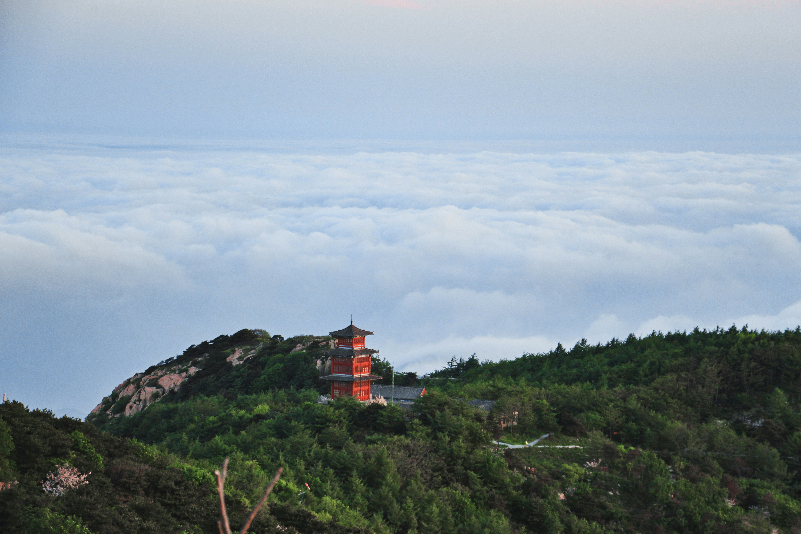
While China’s ultra-modern metropolises often capture the attention of foreign visitors, the true heart of the nation lies in Shandong — a province of breathtaking natural beauty, profound tradition, and pivotal geo-political significance. Situated across the Yellow Sea from the Korean peninsula, this northern coastal province, China’s second most populous, boasts a geography as diverse as its history. The province is composed of two distinct regions: an inland area, encompassing roughly two-thirds of Shandong, centers on Mount Tai, the most revered mountain in Daoism and a site of continuous religious worship for millennia. This sacred mountain is cradled by the North China Plain, one of China’s most fertile and intensively cultivated agricultural regions, and the birthplace of its most celebrated sage, Confucius, whose teachings shaped the course of Chinese civilization.
Throughout much of imperial history, Shandong stood as both China’s agricultural cornerstone and its spiritual epicenter. Yet beyond its fertile plains and sacred mountains, the Shandong Peninsula reveals a strikingly different character: a rugged, seaward-facing terrain, its jagged coastline carved by the tides and steeped in legend. It was here that the First Emperor (259–210 BCE), consumed by dreams of immortality, launched expeditions to the mythical islands of Penglai in search of eternal life.
Though his dynasty fell within a decade, the coastal communities of Shandong retained their enterprising spirit, transforming the peninsula into a bustling hub of fishing, mining, and maritime commerce. When the Ming Dynasty (1368–1644) imposed strict restrictions on foreign trade and emigration, Shandong emerged as the beating heart of a clandestine network that thrived for over three centuries. This era of smuggling was fueled by a confluence of economic and geopolitical forces. Japan, rich in silver deposits, became a key market as China transitioned from paper to silver currency, creating an insatiable demand for the precious metal. Meanwhile, Chinese silk, tea, and textiles were highly coveted across East Asia and beyond. The restrictive trade policies of the Ming Dynasty, combined with Japan’s internal strife during the Warring States period (mid-1400s to early 1600s), created fertile ground for illicit commerce.
With its strategic location and deep-rooted seafaring traditions, Shandong emerged as the linchpin of a clandestine trade network that defined pre-modern East Asia. This legacy of interconnectedness would profoundly influence Shandong’s modern trajectory, particularly in the 19th century, when the province became a crucible of geopolitical rivalry. As China, Japan, and Western powers clashed for dominance, the struggle for control of the Shandong Peninsula emerged as a pivotal force shaping the destiny of East Asia — and, by extension, the global order.
In 1897, Germany’s aggressive use of gunboat diplomacy to carve out a sphere of influence in Shandong ignited simmering regional tensions. These pressures were further compounded by devastating global famines triggered by El Niño events in 1898 and 1899. Amidst this turmoil, the Boxer Rebellion erupted, as masses of Chinese peasants, known as the “Boxers,” rose up against Christian communities and besieged foreign legations in Beijing. Weakened by imperial demands and indemnity, China’s last imperial dynasty, the Qing (1644-1911), collapsed within a decade after the incident, but the region’s underlying tensions remained. The aftermath of World War I saw Japan seize former German holdings in Shandong, deploying 70,000 troops and cementing its presence in the region. From this strategic foothold, Japan invaded Manchuria in 1931 and launched a full-scale invasion of China in 1937, marking the beginning of a brutal, global war.
After 1949, Shandong, like other coastal provinces, turned inward as China embraced a socialist vision, nationalizing land, abolishing private property, and striving for self-sufficiency. This era brought a tumultuous mix of upheaval and hardship: the province, once celebrated as China’s breadbasket, was among the regions hardest hit by the Great Leap Forward, struggling to achieve food security for decades. Since the 1970s, Shandong has reemerged as a dynamic force, leveraging its international ties and the enterprising spirit of its people to become a manufacturing and export powerhouse. At the same time, the province has also become boasts a thriving wine industry and a growing tourism sector. Blessed with a warm maritime climate, the Shandong peninsula is one of the world’s seven grape regions, where sun, sand, and sea — the ‘3S’ terroir — create the ideal conditions for viticulture. From boutique wineries to e-commerce-driven villages, Shandong has become a pioneer in tackling China’s urban-rural divide and environmental challenges, embodying the seamless integration of globalization, technology, agriculture, and commerce.
Shandong’s story is a compelling tapestry of local heritage intertwined with global influences — a microcosm of the challenges and opportunities shaping contemporary China. On this five-day journey, you’ll immerse yourself in the province’s past and present, exploring its diverse landscapes and vibrant culture. From crystalline beaches to sacred mountains, you’ll traverse this vast and storied region, uncovering its rich history and breathtaking scenery. Along the way, you’ll connect with the people who bring Shandong to life: local students, farmers and wine makers, political and business leaders, as well as Dartmouth alumni and families rooted in the area. This journey offers unparalleled opportunities to learn, engage with local visionaries, and broaden your perspective on a region that continues to shape China’s future.